
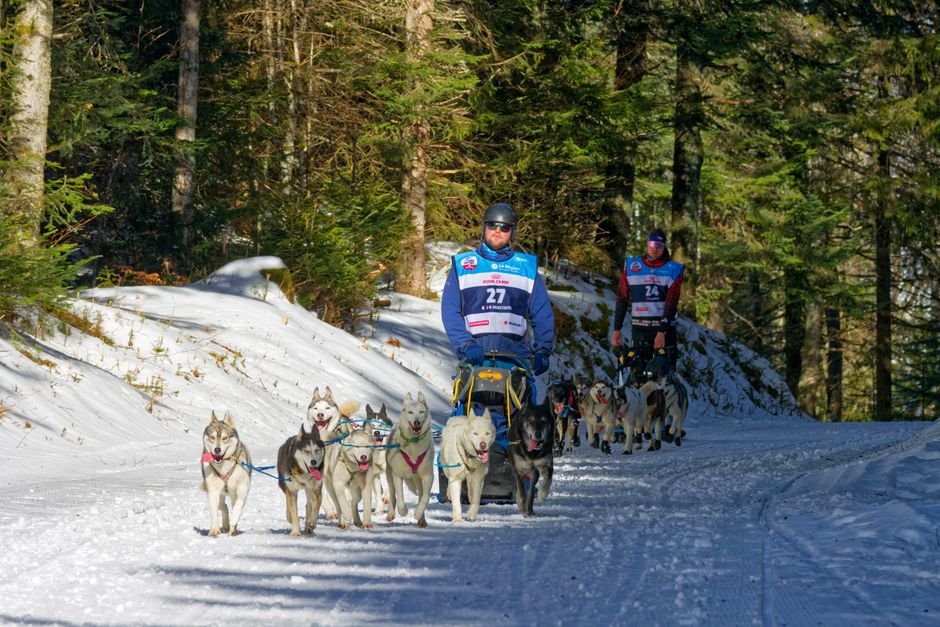
Few novels capture the raw pull of nature and the struggle for survival as powerfully as The Call of the Wild. Written by Jack London and first published in 1903, this adventure story follows a dog named Buck as he is torn from a comfortable California life and thrust into the brutal world of the Klondike Gold Rush. The book became an instant success and cemented London’s reputation as a master storyteller. More than a century later, it remains one of the most beloved works of American literature.
The Story of Buck
The central character of The Call of the Wild is Buck, a large dog who is part St. Bernard and part Scotch Shepherd. Weighing 140 pounds, Buck lives a pampered life on a ranch in the Santa Clara Valley of California. That life ends when he is stolen by a gardener’s assistant and sold into the brutal world of sled dogs in Alaska. The novel traces Buck’s journey from a domesticated pet to a fierce, instinct-driven creature who answers the call of his wild ancestors.
Once in the Yukon, Buck is forced to learn the law of club and fang. He endures harsh weather, cruel masters, and fierce battles with other dogs. Over time, he sheds his civilized ways and taps into primal instincts. The story is as much about survival in the frozen north as it is about the deep, inner transformation of a creature rediscovering its true nature.
Characters in The Call of the Wild
While Buck is the undisputed protagonist, the novel also features a range of human characters who cross his path. Some are cruel and treat their dogs as tools, while others show kindness and respect. Among the most memorable is a man named John Thornton, a gold prospector who forms a deep bond with Buck. Through these relationships, London explores the capacity for both brutality and compassion in humans. The other sled dogs Buck encounters also play important roles, showing how hierarchy and loyalty function in a pack.

Setting and Historical Context
The novel is set in the Yukon region of Canada during the 1890s Klondike Gold Rush. Thousands of fortune seekers flooded the area, and dogs were essential for transporting supplies and mail across the frozen terrain. Jack London himself spent time in the Klondike, and his firsthand observations give the story an authenticity that still resonates. Some readers associate the story with Alaska, and indeed the gold rush extended into parts of that territory, but the primary setting is the Yukon.
Themes in The Call of the Wild
Several major themes run through the novel. Survival is the most obvious: Buck must adapt to an environment where weakness means death. The clash between civilization and nature is another central idea. Buck’s journey represents a return to a more primitive state, shedding the constraints of human society. Finally, the power of instinct drives the narrative. Buck hears the call of his wolf ancestors, and that call becomes louder as the story progresses. London suggests that beneath the surface of every domesticated creature lies a wild, untamed spirit.
Publication History
Jack London’s novel first appeared as a serial in The Saturday Evening Post during the summer of 1903. It was released in book form later that same year. The first edition contained 232 pages. Modern editions vary widely in length; for instance, the Living Book Press edition has 124 pages. The book’s popularity was immediate and lasting, making London one of the best-known authors of his time. It remains in print today and is available in multiple formats, including digital editions.
Film Adaptations
The story has been adapted for the screen multiple times. One of the earliest and most notable is the 1935 film starring Clark Gable. Other adaptations have followed, including a 1972 version, a 1997 television movie, and a 2020 release featuring Harrison Ford. Each adaptation brings its own interpretation, but all center on Buck’s journey from civilization to the wild. The enduring appeal of the story has also led to radio dramas, stage productions, and even animated versions aimed at younger audiences.

Why The Call of the Wild Endures
More than 120 years after its first publication, The Call of the Wild continues to captivate readers. Its themes are universal: the struggle for survival, the pull of nature, and the transformation that comes when a being is stripped of comfort and forced to rely on instinct. The book appeals to adventure lovers and literary readers alike. It is often assigned in schools and remains a staple of classic literature collections. For anyone interested in understanding why Jack London is considered a giant of American letters, this novel is the perfect starting point.
Frequently Asked Questions
Is The Call of the Wild a true story?
No, it is a work of fiction. However, Jack London drew on his own experiences in the Klondike Gold Rush to create a vivid and realistic setting. Many of the details about sled dogs, harsh winters, and the gold rush lifestyle are based on London’s firsthand observations.
What breed is Buck in The Call of the Wild?
Buck is a St. Bernard–Scotch Shepherd mix weighing 140 pounds. Despite a common misconception, he is not a Husky. Some readers and even some adaptations have portrayed him differently, but the novel clearly describes his mixed heritage.
How many pages does The Call of the Wild have?
The first edition had 232 pages. Modern editions vary depending on the publisher and formatting. For example, the Living Book Press edition has 124 pages. Digital versions may have no fixed page count at all.
When was The Call of the Wild published?
The novel was first serialized in The Saturday Evening Post during the summer of 1903. It was then published in book form later that same year. The speed of publication reflected the high demand for London’s work even before the novel was complete.
Whether you are discovering it for the first time or returning to an old favorite, The Call of the Wild remains a powerful reading experience. You can find the full text in digital formats at ClassicLiteratureBooks.com, where it is available as an Epub and Kindle ebook for $2.99. Pick up your copy and follow Buck on his unforgettable journey into the wild.