Friedrich Nietzsche’s Beyond Good and Evil book stands as one of the most influential works in modern philosophy. First published in 1886, this book confronts long-held assumptions about right and wrong, truth and falsehood, and the very foundations of moral thought. Nietzsche wrote the work as a direct challenge to the simplistic either-or thinking that had dominated Western philosophy for centuries. Rather than offering a new moral system, he called for readers to think beyond opposites and question where their deepest values truly come from. The result is a dense, provocative text that continues to spark discussion among students, scholars, and general readers alike.
About the Book and Its Author
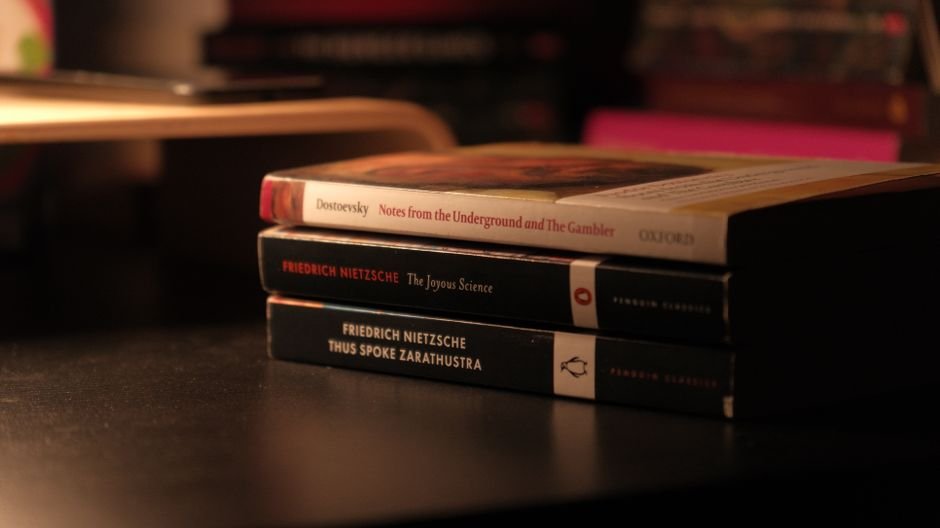
Friedrich Nietzsche wrote Beyond Good and Evil four years after his better-known work Thus Spoke Zarathustra. The book revisits many of the ideas found in that earlier text but presents them in a more direct and polemical style. Nietzsche paid for the publication himself through C. G. Naumann of Leipzig, a common practice for philosophers at the time whose work did not guarantee commercial success. The book later became the predecessor to another major work by Nietzsche, On the Genealogy of Morality, which expands on many of the themes introduced here.
Nietzsche’s central aim in Beyond Good and Evil is to critique traditional morality and to reject the idea of universal moral standards. He attacks the habit of dividing the world into strictly opposite terms, such as good versus evil, and argues that such oppositions oversimplify the complexity of human experience. For Nietzsche, moral philosophers had spent centuries building systems on fragile assumptions. He wanted to expose those assumptions and open the door to a new kind of thinking.
The Full Title and Its Significance
The full English title of the work is Beyond Good and Evil: Prelude to a Philosophy of the Future. The original German title is Jenseits von Gut und Böse. Vorspiel einer Philosophie der Zukunft. The words “Prelude to a Philosophy of the Future” signal that Nietzsche did not see this book as his final statement. Instead, he presented it as a preparation, a clearing of the ground for the kind of philosophy he believed humanity would one day need.
The title itself points to the need for moral philosophy to move beyond simplistic black-and-white moralizing. Nietzsche did not argue that there is no difference between good and evil. Rather, he questioned whether the categories themselves are as fixed and universal as previous philosophers had claimed. He wanted his readers to examine who defines what is good, why those definitions hold power, and what interests they serve.

Structure of the Beyond Good and Evil Book
Beyond Good and Evil is divided into nine distinct parts, each focusing on a different aspect of Nietzsche’s critique. The parts are:
- The Prejudices of Philosophers
- The Free Spirit
- The Religious Mood
- Apophthegms and Interludes
- The Natural History of Morals
- We Scholars
- Our Virtues
- Peoples and Countries
- What Is Noble?
The first section, “The Prejudices of Philosophers,” sets the tone by questioning the motives behind philosophical inquiry. Nietzsche suggests that even the most abstract thinkers are driven by hidden instincts and personal biases. “The Free Spirit” explores the qualities needed to break away from conventional thinking. “The Religious Mood” examines the psychological roots of religious belief. “Apophthegms and Interludes” is a collection of short aphorisms that offer sharp observations on a wide range of topics.
The later sections turn to more specific subjects. “The Natural History of Morals” traces how moral systems develop and change across cultures. “We Scholars” critiques the academic world and its limitations. “Our Virtues” questions whether modern virtues are as noble as they appear. “Peoples and Countries” offers observations on different European nations and their characteristic traits. The final section, “What Is Noble?”, explores the concept of nobility and its role in shaping value systems.

Translations and Editions
Readers approaching Beyond Good and Evil have several translation options. The first English translation was completed by Helen Zimmern, who was two years younger than Nietzsche and knew the author personally. Her translation was later included in The Complete Works of Friedrich Nietzsche, published between 1909 and 1913, and is the version available for free through Project Gutenberg.
Another widely used translation was produced by Walter Kaufmann, a scholar who also provided extensive commentary. Kaufmann’s translation is published by Penguin Random House and remains a popular choice for students and general readers. Both the Zimmern and Kaufmann translations have their strengths, and many readers find it useful to compare passages side by side to get a fuller sense of Nietzsche’s meaning.
For those looking to purchase a physical copy, as of the most recently available data a paperback edition is priced at $6.99 and a hardcover edition at $9.99. A Kindle edition is available for $2.00, and an audiobook version can be obtained at no cost with an Audible membership. Prices may vary by retailer and over time, so readers should verify current pricing with the relevant seller.
The Book’s Place in Nietzsche’s Work
Beyond Good and Evil is often considered one of Friedrich Nietzsche’s greatest books. It occupies a central position in his career, coming after the poetic and metaphorical style of Thus Spoke Zarathustra and before the more systematic investigations of On the Genealogy of Morality. Readers who find Thus Spoke Zarathustra too obscure sometimes turn to Beyond Good and Evil as a more direct expression of Nietzsche’s ideas.
The book covers both morality and metaphysics, making it relevant to anyone interested in how humans decide what is true and what is good. Nietzsche does not provide a tidy system. He raises questions, challenges assumptions, and leaves much of the work to the reader. This open-ended quality is part of what has kept the book alive for well over a century. Each generation of readers finds something new in its pages.
For those new to Nietzsche, it is helpful to approach Beyond Good and Evil with patience. The book was written for an audience already familiar with the history of Western philosophy, and it references thinkers such as Plato, Kant, and Schopenhauer. Reading a good translation with explanatory notes, such as the Kaufmann edition, can make the experience far more rewarding.

Frequently Asked Questions
Is Beyond Good and Evil a difficult book to read?
The book assumes some familiarity with Western philosophy, which can make it challenging for first-time readers. However, the aphoristic style allows readers to take the text in short segments. Starting with a well-annotated translation and reading summaries of the major sections can help make the book more accessible.
Which translation of Beyond Good and Evil should I choose?
The Helen Zimmern translation is available for free through Project Gutenberg and offers a historical perspective. The Walter Kaufmann translation includes helpful commentary and is widely used in academic settings. Many readers benefit from comparing both translations to get a fuller understanding of the text.
How is Beyond Good and Evil related to Thus Spoke Zarathustra?
Nietzsche wrote Beyond Good and Evil after Thus Spoke Zarathustra and covers many of the same ideas, but in a more direct and polemical style. While Thus Spoke Zarathustra uses allegory and poetic language, Beyond Good and Evil presents its arguments in a more straightforward philosophical format.
What does the title Beyond Good and Evil mean?
The title refers to the need for moral philosophy to move beyond simplistic black-and-white moralizing. Nietzsche does not argue that there is no difference between good and evil, but rather questions whether these categories are as fixed and universal as previous philosophers assumed. He encourages readers to examine the origins and purposes of moral judgments.
Is Beyond Good and Evil available as an ebook?
Yes, a Kindle edition is available for $2.00, and the Project Gutenberg edition of the Helen Zimmern translation can be downloaded for free in multiple formats. ClassicLiteratureBooks.com also offers classic literature ebooks in Epub and Kindle formats for $2.99 each, providing another option for readers who want a convenient digital edition.