
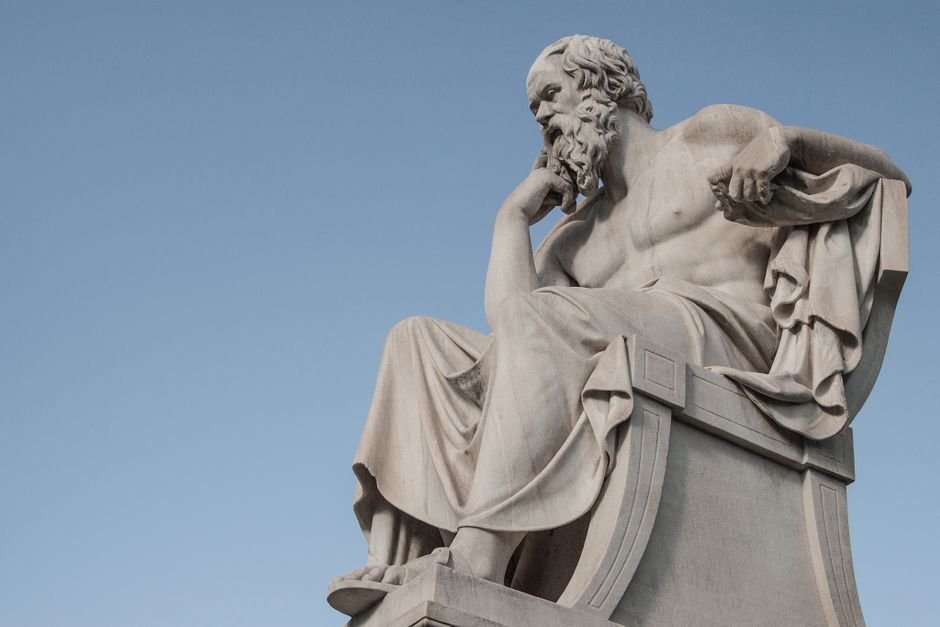
Few works from the ancient world have retained their power to provoke thought and discussion as consistently as the dialogue known as The Republic. Written by the Greek philosopher Plato, this text stands as one of the foundational pillars of Western philosophy. It is a work that examines justice, the structure of an ideal society, and the nature of the individual who lives within that society. Whether you are a student encountering it for the first time or a returning reader, Plato The Republic offers layers of meaning that reward careful attention.
What Is The Republic?
The Republic is a Socratic dialogue authored by Plato. In this literary form, the main character, Socrates, engages in conversation with other Athenians, using questions and answers to probe deeply into complex ideas. The dialogue centers on the concept of justice. Specifically, it concerns the order and character of the just city-state and the just man. Plato does not simply define justice in a single sentence; instead, he builds an entire imaginary city to show what justice looks like in practice, and then he draws parallels to the human soul. This dual focus on the political and the personal gives The Republic its lasting relevance.
The work is Plato’s best-known and most widely read dialogue. Among all of Plato’s writings, only the Laws is longer. Scholars generally agree that The Republic was written around 375 BC, though some sources place its composition around 380 BC. This difference in dating does not change the substance of the work, which has been studied continuously for more than two thousand years.
The Main Character: Socrates
The main character of the dialogue is Socrates. Plato uses the historical figure of his teacher to lead the discussion. Socrates is not a passive narrator; he actively challenges the assumptions of his conversation partners, pushing them to refine their definitions of justice. The dialogue explores the definition of justice and the relation of justice to happiness. One of the central questions Socrates asks is whether it is better to live a just life or an unjust one. Through a series of arguments, analogies, and thought experiments, he builds a case that justice is not merely a social convention but a condition essential to human flourishing.
Because Socrates is the main character, readers are invited to follow his reasoning step by step. The dialogue format means that ideas are tested in real time, with objections raised and answered. This makes The Republic an engaging read: it is not a dry treatise but a lively debate about matters that still matter today.

Justice and the Just City-State
At its core, The Republic concerns justice and the order and character of the just city-state. Plato does not begin by describing a perfect society. Instead, he starts with a simple community and then, through the logic of the dialogue, builds a more complex city that includes guardians, soldiers, and rulers. The just city-state is one where each part performs its proper function without interfering with the others. For Plato, justice in the city means that the ruling class is wise, the guardians are courageous, and the producing class is temperate. When each group does its own work, the city as a whole is just.
Plato then applies this same framework to the individual. Just as a city has three parts, so does the human soul: reason, spirit, and appetite. A just person is one whose reason rules, whose spirit supports reason, and whose appetite is kept in check. This analogy between the city and the soul is one of the most famous features of the dialogue. It allows Plato to argue that justice is not imposed from outside but is a natural harmony within a person. The relation of justice to happiness becomes clear: a just person is a well-ordered person, and such a person is happier than one whose inner parts are in conflict.

The Scope and Structure of the Work
The Republic is the longest of Plato’s works except for the Laws. Its length allows Plato to explore many interconnected topics. In addition to justice, the dialogue touches on education, the role of art, the nature of reality, and the famous allegory of the cave. Each book of the dialogue builds on the previous one, creating a sustained argument that rewards reading the whole work rather than jumping to excerpts.
The dialogue is divided into ten books in modern editions. Early in the work, Socrates and his interlocutors attempt to define justice and find it unsatisfying. This leads to the construction of the ideal city, which occupies the middle books. Later, the discussion shifts to the forms of government and the types of souls that correspond to them. The final book returns to the rewards of justice, both in life and after death. This careful structure is part of why The Republic is so highly regarded by scholars and general readers alike.
Why Readers Return to Plato The Republic
Even though The Republic was written more than two thousand years ago, readers continue to find value in its arguments. The questions it raises about justice, leadership, and the good life are universal. Plato’s best-known dialogue remains a touchstone for anyone interested in philosophy, political theory, or literature. The Socratic method of inquiry, on display throughout the work, offers a model for critical thinking that is as useful today as it was in ancient Athens.
For those who want to experience this classic work in a convenient format, digital editions are widely available. Reading The Republic allows you to engage directly with Plato’s ideas and to decide for yourself whether his vision of the just city and the just soul still holds up. Whether you read it for a class, for personal enrichment, or simply out of curiosity, you will find a dialogue that asks hard questions and does not settle for easy answers.

Frequently Asked Questions
What is The Republic about?
The Republic is a Socratic dialogue that examines the definition of justice and the relation of justice to happiness. It explores the order and character of the just city-state and the just man. Through discussion led by Socrates, Plato builds an ideal city as a model for understanding justice in both society and the individual.
Who wrote The Republic?
The Republic was written by the ancient Greek philosopher Plato. He authored the dialogue around 375 BC, though some sources place the date closer to 380 BC. It is Plato’s best-known and most widely read work.
Who is the main character in The Republic?
The main character of The Republic is Socrates. Plato uses Socrates as the central figure who guides the conversation, asking probing questions and challenging the opinions of other characters to explore the nature of justice and the good life.
Is The Republic a long book?
Yes, The Republic is the longest of Plato’s works except for the Laws. Its length reflects the depth and breadth of its topics, including justice, education, government, and the soul. Modern editions are typically divided into ten books.
Why is The Republic considered important?
The Republic is considered important because it addresses fundamental questions about justice, leadership, and human happiness. As Plato’s best-known dialogue, it has influenced centuries of philosophical and political thought and remains a key text in the study of Western philosophy.